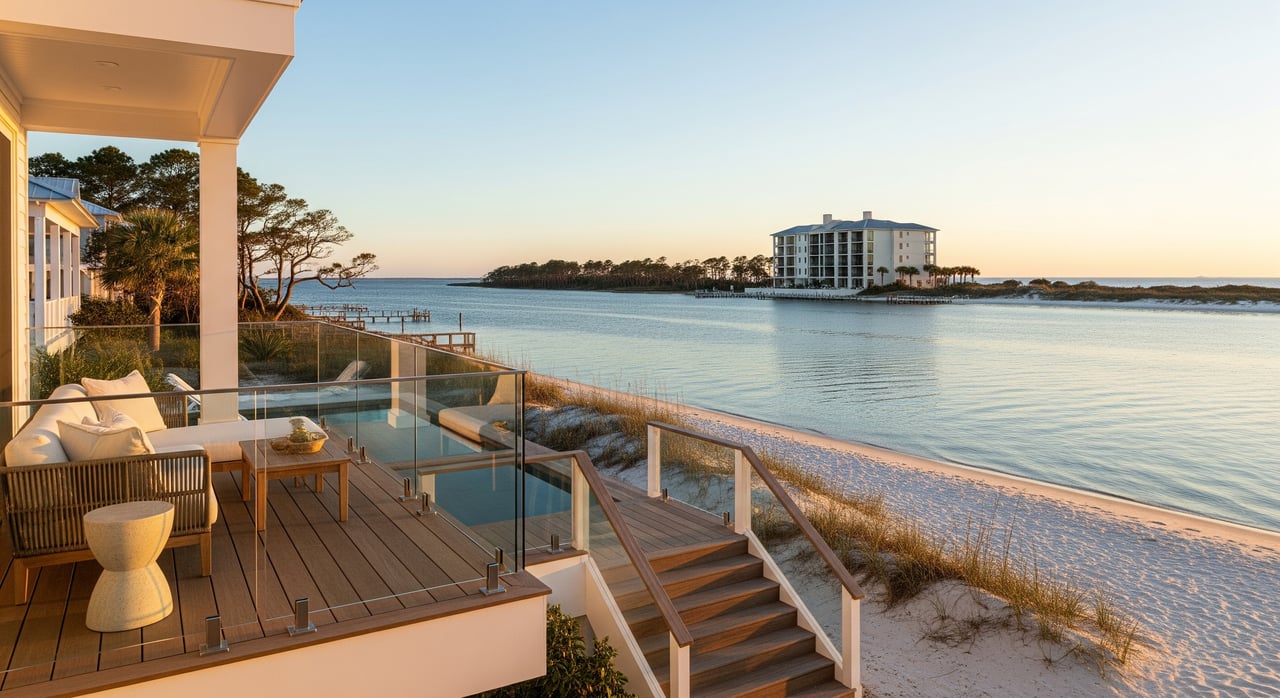
Salt air, sunrise on the Sound, and easy beach access. If you are choosing between a condo or a beach house in Gulf Breeze, you are not alone. Both offer the coastal lifestyle, but they come with different costs, responsibilities, and rules. In this guide, you will compare the essentials so you can pick the fit that matches your budget, time, and goals. Let’s dive in.
Gulf Breeze market basics
Gulf Breeze sits on a peninsula along Santa Rosa Sound, just across from Pensacola Beach. You will find a mix of low to mid-rise condos, townhomes, and single-family waterfront or soundfront homes. Properties near the water usually carry a premium for views, docks, and easy recreation.
Tourism and proximity to Pensacola bring steady demand from primary buyers and second-home owners. Coastal markets can see more price swings than inland areas and are sensitive to insurance costs, lending, and storm events. Keep this context in mind as you compare options.
Costs at a glance
Purchase price and entry
- Condos often provide a lower entry price for a comparable location because land and exterior elements are shared.
- Single-family waterfront homes typically cost more up front, but you get private land and may gain features like a personal dock or seawall.
Recurring fees and maintenance
- Condos charge association fees that usually cover exterior building insurance, common area upkeep, amenities, management, and reserves. Fees vary by building age, amenities, and flood or wind mitigation.
- Beach houses put you in charge of all exterior maintenance, landscaping, and coastal structures. Plan for periodic seawall, dock, and erosion-related work, which can be significant.
Reserves and special assessments
- In condos, strong reserves help fund big repairs. Weak reserves can lead to special assessments. Review the budget, reserve study, financials, and recent meeting minutes.
- For beach houses, set aside an annual maintenance reserve and plan for larger projects like roof or seawall work over time.
Taxes and other charges
- Property taxes reflect assessed value and local millage rates. Waterfront locations often see higher assessments.
- Expect possible municipal fees or special districts. Confirm what applies to your parcel before you buy.
Insurance and financing
Policy differences
- Condo owners rely on a master property and wind policy purchased by the association, then add an HO-6 policy for interior finishes, personal property, loss of use, and liability.
- Beach house owners carry a homeowner’s policy that covers the dwelling, other structures like docks, personal property, and liability.
Flood and elevation
- Flood insurance is a key factor on the coast. If the home is in a Special Flood Hazard Area, lenders will require flood coverage for a federally backed loan.
- Premiums depend heavily on elevation relative to Base Flood Elevation. Ask for an elevation certificate and obtain quotes early.
Wind coverage
- Florida policies often include separate hurricane or wind deductibles, sometimes percentage-based. Wind-mitigation features, like shutters and reinforced roof attachments, can affect insurability and cost.
- Condo associations buy master wind policies that may carry large deductibles. Understand how deductibles could be shared with unit owners.
Loans and condo approvals
- Financing a condo may involve project-level approvals, occupancy ratios, reserve requirements, and delinquency thresholds that vary by loan program.
- Beach houses typically have broader lending options and fewer project hurdles, though flood insurance requirements still apply if you finance.
Rentals and rules
HOA restrictions
- Many condo associations regulate rentals through minimum lease terms, rental caps, guest registration, and approval steps. These rules can limit income or timing.
- Single-family homes in an HOA may also have rental guidelines. Review all governing documents before you commit.
Local licensing and taxes
- Short-term rental rules, licensing, and tourist tax collection can apply in Gulf Breeze and Santa Rosa County. Requirements may include registration, occupancy limits, parking rules, and local contacts for emergencies.
- Confirm what is allowed and what it costs to stay compliant if rental income is part of your plan.
Practical rental tips
- Condos with strong amenities can draw steady vacation demand, though caps and guest rules can limit flexibility.
- Beach houses with private docks or beach access can command premium rates. Expect more hands-on management, cleaning, and post-stay repairs.
Coastal risk and resilience
Flood zones and elevation
- Check FEMA flood maps to understand your property’s flood zone and Base Flood Elevation. Elevation affects insurance cost and long-term risk.
- If you plan to remodel or elevate, understand how changes could affect premiums and compliance.
Construction and permits
- Florida’s coastal building standards address wind-borne debris and structural resilience. Docks, seawalls, and shoreline work often need permits that may involve federal, state, and local agencies.
- Ask for maintenance records and any permits for seawalls and docks before you buy.
Long-term outlook
- Sea-level rise and shoreline change can influence values, insurance availability, and maintenance needs over time. Factor your time horizon into the decision.
Mitigation and inspections
- Look for wind-mitigation features, impact windows or shutters, reinforced roof connections, and well-maintained seawalls and docks.
- Order a coastal-focused inspection that evaluates drainage, foundation, dock structure, and signs of settlement or erosion.
Decision scenarios
Full-time living
- Choose a beach house if privacy, control, and boating infrastructure are top priorities, and you are comfortable managing maintenance and insurance.
- Choose a condo if low-maintenance living and built-in amenities matter most, and you are comfortable with association rules and fees.
Second home
- Condos often fit intermittent use with easier upkeep and predictable costs.
- A smaller beach house can work if you want personal outdoor space and are prepared to schedule maintenance around your travel.
Short-term rental focus
- Scrutinize HOA rental rules in any condo and verify local licensing and taxes.
- Beach houses may achieve higher nightly rates but bring higher operating costs and more active management.
Quick checklist
For any Gulf Breeze property:
- Confirm flood zone, elevation certificate, and current flood and wind insurance quotes.
- Calculate total cost of ownership: taxes, insurance, HOA fees if any, and realistic maintenance.
- Verify local short-term rental permissions, licensing, and taxes if applicable.
- Review recent comparable sales and expected market liquidity for the property type.
If buying a condo:
- Request governing documents, budget, reserve study, insurance certificate, meeting minutes, and delinquency figures.
- Ask about rental limits, owner-occupancy ratios, pending assessments, or litigation.
- Confirm project approval status for your preferred loan program.
If buying a beach house:
- Inspect seawalls, docks, and shoreline conditions, plus maintenance history and permits.
- Clarify easements, riparian rights, and shared shoreline responsibilities.
- Verify elevation, prior flood claims, and any compliance issues.
Work with a local pro
Choosing between a condo and a beach house in Gulf Breeze is about fit, not just price. Your best choice depends on how you plan to live, your tolerance for maintenance, and the insurance and financing that make the numbers work. With renovation and staging expertise plus deep coastal knowledge, Peggy Braun can help you compare real options, model true costs, and position your purchase for long-term enjoyment and value.
FAQs
What is the main cost difference between Gulf Breeze condos and beach houses?
- Condos usually have lower entry prices but monthly HOA fees, while beach houses often cost more up front and require you to budget for exterior and coastal structure upkeep.
How does flood insurance work for Gulf Breeze properties?
- Lenders require flood insurance in designated flood zones, and premiums depend on elevation relative to Base Flood Elevation and specific property risk features.
Are condos harder to finance than single-family homes?
- Often yes, because lenders evaluate the condo project’s financial health, occupancy, and reserves, which can limit certain loan programs or require larger down payments.
Can I short-term rent in a Gulf Breeze condo?
- It depends on the association’s rules, which may include minimum stays, rental caps, guest registration, and approval processes, plus local licensing and taxes.
Who pays for seawall or dock repairs at a beach house?
- Responsibility depends on ownership and any recorded easements or HOA agreements, and repairs may require permits and significant budgets.
Will a condo be cheaper to insure than a beach house?
- Not always, since association master policies and deductibles can be costly, even though your personal HO-6 policy may be smaller than full dwelling coverage.