Trying to choose between a condo and a townhome on Navarre Beach? At first glance, they can look similar, especially in a coastal setting where walkability, water views, and low-maintenance living all sound appealing. But on Navarre Beach, the real difference often comes down to legal ownership, maintenance responsibility, insurance exposure, and association rules. If you want to buy with confidence, understanding those details can save you from surprises later. Let’s dive in.
Why Navarre Beach Changes the Conversation
Navarre Beach is not just another beach community. It sits on Santa Rosa Island and is part of a coastal environment shaped by public access, storm exposure, and active shoreline management. According to the Florida Department of Environmental Protection coastal access guide, this area includes miles of sandy shoreline and multiple public access points.
That matters because beachfront living here comes with a different set of practical realities. Santa Rosa County manages the beach area, including the pier, public facilities, and beach-use rules like no glass, no fires, no pets on the beach, no overnight parking, and no camping, as outlined by the Navarre Beach Department. For you as a buyer, that means coastal ownership is about more than the view. It is also about how the property interacts with public access, county management, and ongoing coastal work.
Recent beach restoration records from Santa Rosa County also show that nourishment projects and temporary access closures are a normal part of life on Navarre Beach. If you are comparing two properties, it helps to know whether an association handles more of that impact for you, or whether you may be taking on more direct responsibility.
Condo vs. Townhome in Florida
What a condo means
In Florida, a condominium is a specific form of ownership. Under state law, condo ownership includes your unit plus an undivided share of the common elements, and the condo association has authority over the maintenance, management, and operation of the condominium property. You can review that framework in Florida’s association definitions and statutes and condo maintenance provisions under Florida Statute 718.111.
In simple terms, a condo is usually a building-centered ownership model. You own the interior unit, while the association generally has a larger role in maintaining shared structures and systems. On Navarre Beach, that can include major items like roofs, exterior surfaces, waterproofing, and other building components, depending on the governing documents.
What a townhome means
A townhome is not always a separate legal category by appearance alone. In Florida, many townhomes are parcel-based properties within a homeowners’ association, which means you may own the lot and structure directly, while the HOA maintains only the common areas identified in the governing documents. Florida’s HOA statute defines the association and common area structure in Statute 720.301.
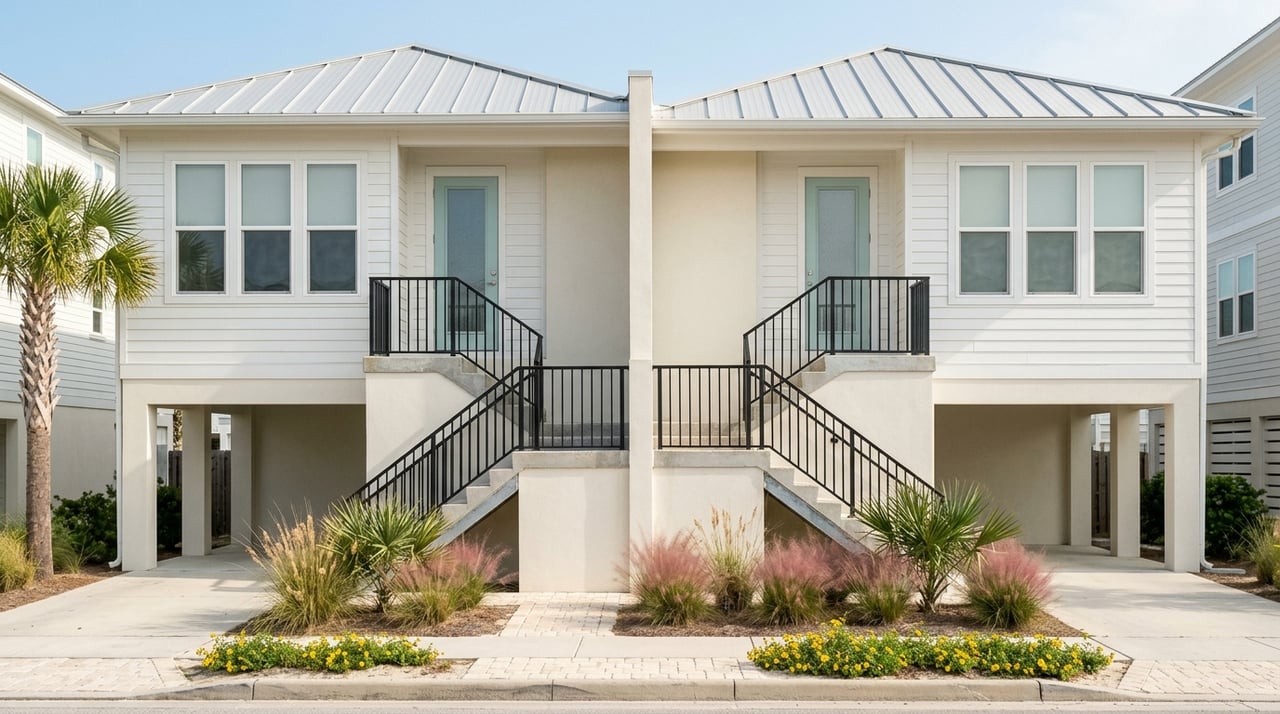
That is why the word “townhome” can be misleading. Two homes may look almost identical from the street, but one may legally be a condominium while the other is a fee-simple parcel in an HOA. If you are buying on Navarre Beach, you should confirm the legal structure early, because it affects maintenance, reserves, disclosures, and insurance questions.
Ownership Structure Shapes Your Costs
Condo costs and maintenance
Condos often appeal to buyers who want fewer direct exterior chores. Because the association typically handles more of the shared building components, you may have less day-to-day responsibility for exterior upkeep. The tradeoff is that your monthly dues, reserve contributions, or special assessments may reflect large-scale repairs and replacement work.
That is especially important in a salt-air environment like Navarre Beach. Coastal exposure can accelerate wear on paint, windows, roofs, waterproofing, and structural elements. Florida’s condo resources from the Department of Business and Professional Regulation highlight how reserve planning and building-condition issues can affect owners in condominium communities.
Townhome costs and maintenance
A fee-simple townhome in an HOA can feel more like owning a house. You may have more direct control over the parcel, but you may also carry more responsibility for exterior items, depending on the declaration and community rules. HOA reserve accounts can exist for capital expenditures and deferred maintenance, but under Florida Statute 720.303, reserve treatment can differ from condominium rules.
That means your monthly dues may be lower in some townhome communities, but that does not always mean your total ownership cost is lower. If the owner is responsible for more exterior upkeep, you may simply be paying for those items in a different way.
Coastal Risk Matters More Than Style
On Navarre Beach, one of the biggest differences between a condo and a townhome is how coastal risk is shared. Flood hazard, wind exposure, storm damage, and erosion-related maintenance can all affect your budget over time.
FEMA explains that flood maps are the official tool for understanding flood hazard, and that flood insurance is separate from homeowners insurance. FEMA also notes that coastal high-hazard areas such as Zone V and VE involve wave action and fast-moving water, while some locations in the Navarre Beach planning area also include Zone AE.
For you, that can influence:
- Flood insurance needs
- Deductibles and policy structure
- Association reserve planning
- Future repair budgets
- The possibility of special assessments
A condo association may absorb more of the building-level storm management, but that can also mean shared costs when major work is needed. A townhome may offer a more house-like ownership experience, but your direct exposure to exterior maintenance can be greater. The right fit depends on how much responsibility you want to manage yourself.
Condo Rules Bring More Disclosure
If you like more paperwork upfront, that is actually one area where condos can help. Florida requires condo sellers to provide a more extensive disclosure package. Under Florida Statute 718.503, buyers may receive documents such as the declaration, bylaws, rules, annual financial information, and, when applicable, milestone inspection summaries and the most recent structural integrity reserve study.
For HOA purchases, the required disclosure is generally more limited. Florida Statute 720.401 focuses on the fact that you are joining an HOA, paying assessments, and may face special assessments or liens if obligations are not paid.
This difference matters on Navarre Beach because condo paperwork may reveal more about building condition and reserve health before closing. With a townhome in an HOA, you may need to dig more carefully into the governing documents and budgets to understand where future costs could land.
Inspections and Reserve Rules Can Differ
For older condo buildings, Florida has added important safety and planning requirements. Under Florida Statute 553.899, milestone inspections apply to certain condo and cooperative buildings that are three stories or more, generally beginning at 30 years of age, with earlier timing possible for buildings near salt water.
DBPR also explains that a structural integrity reserve study is used for qualifying condo buildings and covers eight critical items, including the roof, structure, fire protection systems, plumbing, electrical systems, waterproofing and exterior painting, windows and exterior doors, and other significant building components.
These condo-specific requirements do not apply in the same way to every townhome community. So if you are comparing an older beachfront condo to a fee-simple townhome, the compliance profile may be very different even if the price point feels similar.
Lifestyle Differences You Should Verify
Many buyers start with lifestyle. That makes sense. You are probably imagining morning walks, easy beach access, and a home that fits how you want to live on the Gulf Coast.
In general, condos often feel more shared because your home sits within a broader common-element framework. Townhomes in HOAs can feel more private or house-like because the parcel is owned directly and the common areas are more limited. But that is only a starting point, not a guarantee.
On Navarre Beach, you should look closely at the rules for:
- Parking and guest parking
- Pet restrictions
- Rental policies
- Storage limitations
- Outdoor use rules
- Beach access details
Also remember that owning near the beach does not automatically mean full private control of the shoreline. County rules and public access systems still shape how the beach is used, as shown on the Santa Rosa County Navarre Beach page.
Questions to Ask Before You Tour
Before you fall in love with the view, ask the questions that reveal how the property actually works.
- Is this property legally a condominium or a parcel-based townhome in an HOA?
- Which exterior components are owner responsibilities and which belong to the association?
- Are there any current or planned special assessments?
- Is the building subject to milestone inspections or a structural integrity reserve study?
- What does the master insurance policy cover?
- What are the current deductibles?
- What are the rules for rentals, pets, parking, and guest use?
- Does the community rely on county beach access or offer a separate access arrangement?
- Are there active restoration projects or access changes that could affect the property?
These questions can tell you a lot about future cost, convenience, and peace of mind.
Which Option Fits You Best?
If you want a more hands-off ownership style and are comfortable with a building-centered association structure, a condo may be the better match. If you prefer a more house-like setup and want more parcel-level control, a townhome in an HOA may feel more natural.
On Navarre Beach, though, the smartest choice is rarely based on the label alone. It comes down to how the governing documents divide maintenance, reserve funding, insurance responsibility, and coastal risk. That is where the true difference lives.
If you are comparing condos and townhomes on Navarre Beach, working with a local advisor can help you look beyond finishes and floor plans. Peggy Braun can help you evaluate the ownership structure, lifestyle fit, and coastal considerations so you can make a confident move.
FAQs
What is the main difference between a Navarre Beach condo and a Navarre Beach townhome?
- The biggest difference is usually the legal ownership structure. A condo is generally tied to shared common elements and association-managed building components, while a townhome may be a parcel-based property in an HOA with different owner responsibilities.
Do Navarre Beach condos usually include more maintenance in the dues?
- Often, yes. Condo associations commonly handle more shared exterior and building-related maintenance, but the exact scope depends on the governing documents and can affect dues, reserves, and special assessments.
Can a Navarre Beach townhome still have an HOA?
- Yes. Many townhomes are located in mandatory HOA communities, and the HOA may manage common areas, budgets, and rules even if you own the parcel directly.
Are flood insurance needs different for condos and townhomes on Navarre Beach?
- They can be. FEMA states that flood insurance is separate from homeowners insurance, and coverage needs can vary based on flood zone, ownership structure, lender requirements, and what the association’s policy covers.
Do older Navarre Beach condos face extra inspection requirements?
- Yes. Certain condo buildings that are three stories or more may be subject to Florida milestone inspection and structural reserve study requirements, especially older buildings near salt water.
Should you read the association documents before buying on Navarre Beach?
- Absolutely. The governing documents help clarify maintenance duties, reserves, insurance coverage, rules, and possible special assessments, which are all especially important in a coastal market.