If you are drawn to places with brick streets, bay views, and homes that feel tied to a real story, Pensacola gives you several ways to live that lifestyle. Some areas place you near downtown energy and preserved architecture, while others bring you closer to parks, marinas, and neighborhood-scale waterfront access. If you are exploring where to buy or simply trying to understand what makes these parts of Pensacola distinct, this guide will help you compare the city’s historic and waterfront neighborhoods with more clarity. Let’s dive in.
Why Pensacola Stands Out
Pensacola’s appeal comes from how closely its history and waterfront setting overlap. The city identifies the Pensacola Historic District, North Hill, Old East Hill, and the Palafox Historic Business District as its core historic districts, while downtown waterfront planning focuses on a walkable, mixed-use environment with continuous public waterfront access.
That combination matters if you want more than just a house. It gives you the chance to choose between a downtown setting with cultural amenities, a residential historic neighborhood with architectural character, or a bay-oriented area with everyday access to the water.
Downtown Pensacola Living
Downtown Pensacola is widely known as the city’s walkable core. Restaurants, shops, museums, and historic attractions cluster around the original settlement footprint, creating a setting where daily life can feel active and connected.
Historic Pensacola and related sites interpret more than 450 years of local history through museums, historic homes, and living-history programming. For you as a buyer, that means downtown is not just convenient. It is also one of the clearest places in the city to experience Pensacola’s long cultural story day to day.
Pensacola Historic District
The Pensacola Historic District is the city’s oldest designated historic district. It spans 36 blocks bounded by Chase Street, 9th Avenue, Palafox Street, and Pensacola Bay, and it was locally designated in 1968 before being listed on the National Register in 1970.
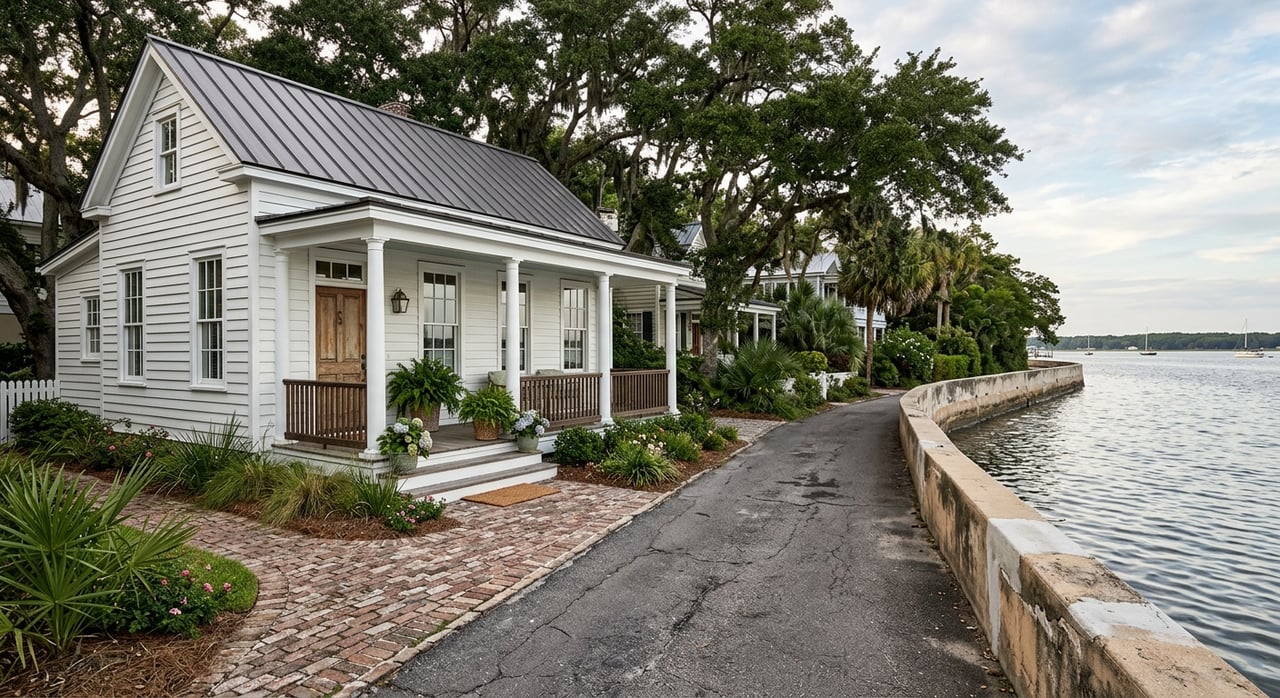
Its architecture is mostly 19th- and 20th-century, with French Creole cottages, Victorian, Greek Revival, and frame vernacular styles represented throughout the district. Today, it functions as an established business area, a residential neighborhood, and a visitor destination, which gives it a mix of energy and historic presence.
Palafox Historic Business District
If you love the idea of historic character paired with shopping, dining, and cultural activity, the Palafox Historic Business District deserves attention. This eight-block district was created to preserve the historic commercial pattern of downtown and includes masonry vernacular buildings along with Greek Revival, Renaissance Revival, Chicago School, and Beaux Arts influences.
The area around Palafox Street is one of the clearest examples of Pensacola’s urban lifestyle. You will find boutiques, galleries, restaurants, and cultural uses concentrated in a compact, easy-to-explore setting.
Historic Residential Neighborhoods
Not every buyer wants to live in the downtown core. Pensacola also offers residential historic neighborhoods that feel quieter and more home-centered while still keeping you close to downtown and the bay.
North Hill
North Hill is one of Pensacola’s best-known historic residential neighborhoods. Located north of Wright Street and east of Palafox Street, it developed largely between 1870 and 1930 and remains primarily residential today, with some shops and restaurants mixed in.
One reason North Hill stands out is architectural variety. The district includes Queen Anne, Classical Revival, Tudor Revival, Spanish Colonial Revival, Modern, and Bungalow styles, which creates a streetscape with a broad visual mix rather than one repeated look.
If you are drawn to larger historic homes and a neighborhood with a strong sense of preservation, North Hill often feels like a natural fit. Its scale and design range can also appeal to buyers who appreciate renovation potential and architectural detail.
Old East Hill
Old East Hill offers a different kind of historic appeal. Bounded by Gadsden Street, 9th Avenue, Wright Street, and Hayne Street, it reflects development from the 1870s through the 1920s and has a more modest scale than North Hill.
Its homes are primarily vernacular, with Craftsman, Mission, and Queen Anne examples. The district was drafted by the East Hill Preservation Association in 1984, which reflects a resident-led commitment to preserving the area’s historic identity.
For many buyers, Old East Hill feels especially approachable because of its residential texture. It can be a strong option if you want historic character in a neighborhood that feels rooted, local, and close to everyday amenities.
East Pensacola and Bayou Living
If your ideal Pensacola lifestyle includes both neighborhood charm and water access, the east side broadens the picture. Visit Pensacola groups East Hill, Old East Hill, and East Pensacola Heights together as part of East Pensacola, where historic roots mix with local dining, parks, and bay views.
This area includes Bayou Texar, Escambia Bay views, shaded streets, and a setting that is only minutes from downtown. East Hill’s one-mile 12th Avenue loop is also known for local landmarks, eateries, bars, and oak-shaded homes, which gives the area a strong everyday-lifestyle feel.
Bayou Texar and Bayview Park
Bayou Texar is one of the city’s most appealing neighborhood-scale waterfront settings. It offers a different experience from the downtown bayfront because the water is woven into nearby parks and daily recreation rather than centered around the commercial core.
Bayview Park adds to that appeal with a boat launch, walking path, tennis courts, dog park, and other park amenities. The Bayview Outdoor Pursuits Center also offers rentals for kayaks, paddleboards, pedal boats, bikes, and camping gear, making the area especially attractive if you want casual access to outdoor recreation.
Sanders Beach
Sanders Beach gives you another waterfront option near the city core. The area includes Sanders Beach Park with a boat launch, along with the Sanders Beach-Corinne Jones Resource Center, a waterfront facility with views of Pensacola Bay.
For buyers comparing waterfront access points, Sanders Beach can represent a practical blend of neighborhood setting and bay proximity. It also shows how Pensacola offers several ways to enjoy the water beyond a beach-focused address.
Downtown Waterfront Access
Pensacola’s downtown waterfront is more than scenic. It is part of the city’s long-term redevelopment vision, which is designed to support a compatible mix of uses, walkability, cultural gathering spaces, and continuous public waterfront access.
That planning framework is important because it helps explain why the bayfront feels integrated into everyday city life. Rather than being separated from downtown, the waterfront is meant to function as an extension of it.
Community Maritime Park
Community Maritime Park is a major piece of that waterfront identity. It includes a waterfront park, amphitheater, festival grounds, and broad views across Pensacola Bay.
The Pensacola Bay Pier at the park adds floating docks and 48 boat slips, reinforcing public access to the water. If you are looking for a location that blends open views, events, and proximity to downtown, this area is one of the city’s strongest lifestyle anchors.
Trails and Bike Routes
Pensacola’s downtown bike-route system helps connect many of its most appealing neighborhoods and landmarks. These routes are designed to let you experience historic homes, museums, city parks, and bay views in one connected framework.
The Pensacola Maritime Heritage Trail is a 1.5-mile waterfront sidewalk that runs from Hawkshaw Lagoon Memorial Park to Community Maritime Park. Its interpretive panels tell the story of the city’s shipping history, adding another layer of place and context to waterfront living.
Beaches Beyond the City Core
Historic Pensacola and waterfront Pensacola are closely linked to a broader coastal lifestyle. Pensacola Beach and Gulf Islands National Seashore extend that lifestyle beyond the mainland, offering public access points, scenic walking paths, kayaking areas, trails, campsites, and historic sites.
For you as a buyer, that means a home in downtown, North Hill, Old East Hill, or the east side does not exist in isolation. These neighborhoods can offer daily access to city amenities while still keeping beaches and coastal recreation within the bigger Pensacola experience.
What Buyers Should Keep in Mind
Character is a major draw in Pensacola’s historic neighborhoods, but preservation also comes with practical considerations. In designated historic districts, the city’s Architectural Review Board is responsible for approving or disapproving plans for buildings that are erected, renovated, or razed.
That does not mean historic ownership is out of reach. It does mean exterior changes, additions, and demolition plans may require more review and planning than they would in other areas.
If you are considering a historic or waterfront home, it helps to think beyond the listing photos. You want to understand how the neighborhood functions, how close it is to downtown or bay access, and what kind of long-term upkeep or design decisions may come with the property.
How to Compare Pensacola Neighborhoods
As you narrow your search, it helps to think in terms of lifestyle first. Pensacola offers several distinct paths, even within a relatively connected area.
Here is a simple way to frame your options:
- Choose downtown Pensacola if you want walkability, cultural attractions, historic sites, and easy access to restaurants and events.
- Choose North Hill if you want a primarily residential historic neighborhood with varied architecture and a strong preservation identity.
- Choose Old East Hill if you want historic charm on a more modest, neighborhood-oriented scale.
- Choose East Pensacola areas near Bayou Texar if you want daily access to parks, paddling, and bay-oriented recreation close to downtown.
- Look toward the broader coastal area if beach access is the top priority in your Pensacola lifestyle.
The right fit depends on how you want your days to feel. Some buyers want to walk to dinner and cultural events. Others want shaded residential streets, a nearby boat launch, or a home base that connects city living with the water.
Pensacola gives you all of those possibilities in a way that feels unusually layered for one market. If you want help comparing neighborhoods, evaluating a historic property, or preparing a waterfront home for sale, Peggy Braun offers local guidance shaped by design insight, market knowledge, and a clear understanding of Gulf Coast lifestyle value.
FAQs
What are the main historic districts in Pensacola?
- The city identifies the Pensacola Historic District, North Hill, Old East Hill, and the Palafox Historic Business District as its core historic districts.
Which Pensacola area feels most walkable?
- Downtown Pensacola is specifically described as walkable, with restaurants, shops, museums, and historic attractions concentrated in the city core.
Which Pensacola neighborhoods offer waterfront access?
- Downtown bayfront areas, Community Maritime Park, Bayou Texar, Bayview Park, Sanders Beach, and the broader Pensacola Beach area all offer different types of waterfront access.
What should buyers know about Pensacola historic district rules?
- In designated historic districts, the city’s Architectural Review Board reviews plans for certain exterior work, renovation, new construction, and demolition.
Can you get both historic charm and beach lifestyle in Pensacola?
- Yes. Pensacola’s downtown historic core, east-side neighborhoods, and nearby beach areas give you options that combine history, bay access, and broader coastal living.